Česky


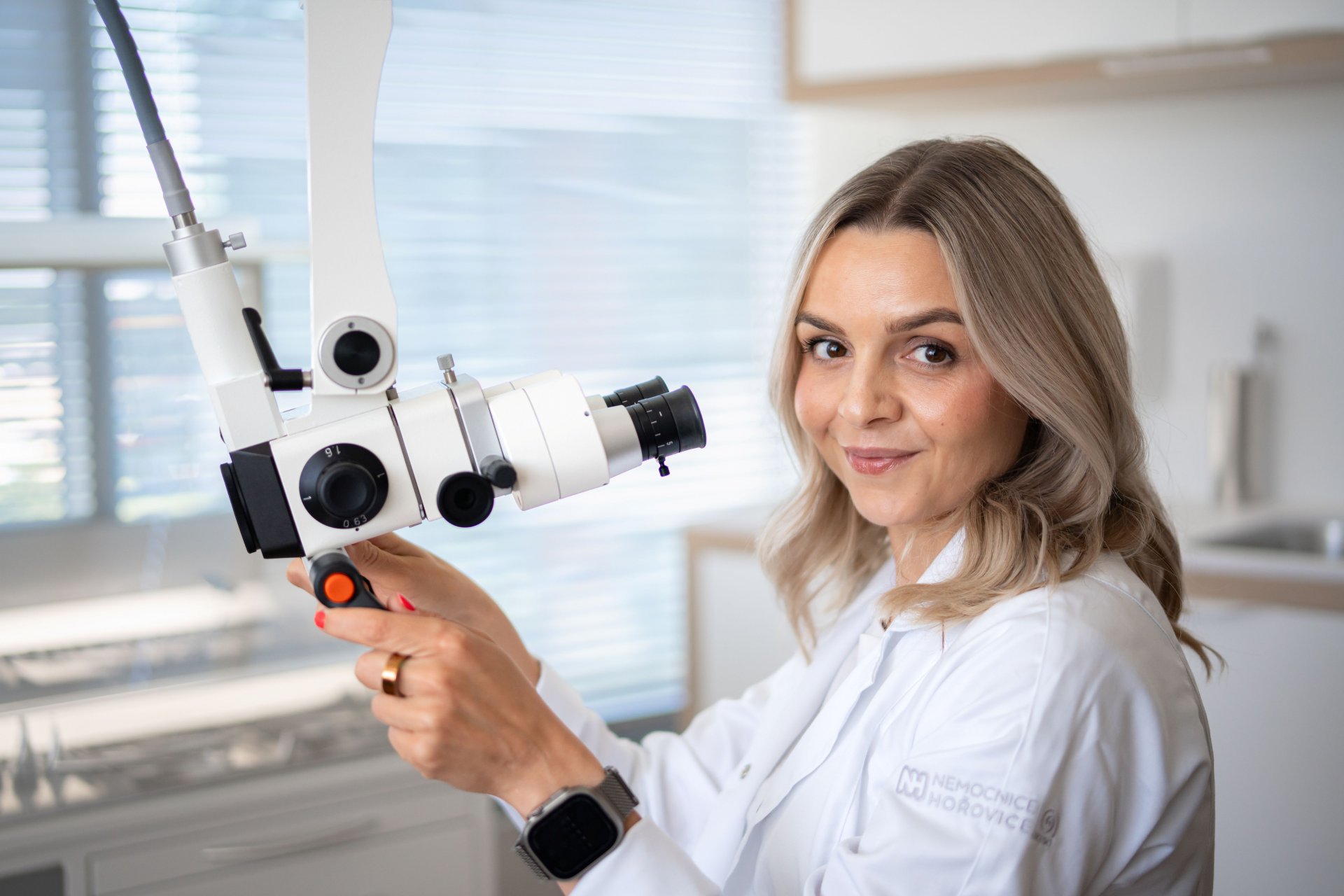
In our new interview, Dr Hradecká discusses her specialism, outlines the most common problems patients may present with at the outpatient clinic, and explains when it is advisable to see an ENT physician.
1. Why did you choose to specialise in ENT? What drew you to it?
I was mainly drawn to the enormous variety within the field. On the one hand, you have young children with their runny noses or ear infections – nothing dramatic at first glance. On the other hand, however, ENT deals with highly complex issues such as sleep and obesity, allergies, problems with the salivary glands, and immune disorders. What fascinates me most about ENT is that problems manifesting in the ears, nose or throat can often have their root cause somewhere else entirely. A typical example is acid reflux or psychological stress, which can manifest itself precisely here, whether as the proverbial ‘lump in the throat’ or ringing in the ears.
2. What do you enjoy and find most fulfilling about working as an ENT physician?
Probably the fact that you can see the results so quickly. When you clear a patient’s ear and they can hear properly for the first time in months, or when they can finally breathe normally after a septum operation, it’s an immediate and tangible relief that you can see straight away. And at the same time, I enjoy the detective aspect of the job – finding out what’s really causing the problems.
3. How would you explain to a layperson what an ENT physician actually does? People often think it’s just about colds and sore throats.
People really do often think we’re ‘just’ there for runny noses and sore throats, but the field is much broader. We deal with hearing and balance, disorders of smell and taste, snoring and sleep-related breathing disorders, head and neck tumours, voice disorders, swallowing difficulties, allergies, and recurrent infections in both children and adults. Put simply, everything from the collarbone upwards – apart from the brain and eyes – falls under our remit, so to speak.
4. What are the most common complaints that patients present with at the ENT outpatient clinic?
Most commonly, these are infections and allergy symptoms, as well as inflammation in the ear area – whether associated with a cold or, in summer, typically due to an ear canal infection following swimming. Patients also come in with ringing in the ears, hoarseness or dizziness, which can be either acute or chronic. Recently, we’ve also been seeing more and more cases of snoring or acid reflux.
5. Are there any symptoms that people often underestimate and for which they should see a physician sooner?
Definitely. Unilateral hearing loss or ringing in one ear, hoarseness lasting longer than three weeks, recurrent difficulty swallowing, or severe snoring accompanied by daytime fatigue are symptoms that people often underestimate and wait for to go away on their own. Yet it would be advisable to see a physician sooner rather than later.
6. In your opinion, what is most important when it comes to looking after your ears, nose and throat? What do we most often forget in our daily lives?
That it is often the simple things that can have a big impact. Nasal irrigation using a pot of salt water can help prevent infections, as well as alleviate allergies or a developing cold. Yet this is
a method that many people won’t even try because they find it unnecessarily complicated or unpleasant.
7. In your practice, you also deal with sleep disorders. How can ear, nose and throat conditions affect the quality of sleep?
Ear, nose and throat conditions can have a very significant impact on the quality of sleep. Restricted nasal breathing, enlarged tonsils or adenoids in children, and anatomical abnormalities in the pharynx can lead to snoring and sleep apnoea syndrome, in which breathing repeatedly stops during the night. The result is poor-quality sleep and morning fatigue; in the long term, there is also a higher risk of cardiovascular disease, obesity or memory impairment. That is why I see ENT and sleep medicine as disciplines that overlap far more than might appear at first glance.
8. Why did you decide to link your professional career specifically with the AKESO POLICLINIC?
I decided to link my professional career with AKESO POLICLINIC because it offers me the opportunity to take a comprehensive approach to sleep disorders, with a focus on prevention and sport. This is also reflected in our collaboration with the Faculty of Physical Education and Sport. In my view, sleep requires just as much attention as work. Just as you wouldn’t turn up late for work because you were scrolling through your phone, you shouldn’t go to bed late for the same reason.
9. What message would you like to convey to patients who are just about to visit your outpatient clinic and may be feeling anxious?
Most examinations at the ENT outpatient clinic are uncomfortable for a few seconds at most, but they aren’t painful. It’s always better to come in even with what seems like a ‘silly’ concern than to put off dealing with it. It saves time and worry for both sides.
10. How do you most enjoy spending your time outside the surgery? What helps you relax and recharge your batteries?
My two children give me the most energy – and take the most out of me, too. I try to spend a lot of time outdoors and keep active. I’m interested in longevity (maintaining health and a long life) and I like to use wearables (smart devices for monitoring bodily functions), such as the Oura Ring, to track my own sleep and recovery. In a way, I’m testing on myself what I then recommend to my patients. I’m also a certified yoga instructor and enjoy continuing my education in preventive medicine, where, in my opinion, ‘alternative’ approaches are significantly ahead of us.
11. Finally, do you have any personal health or lifestyle tips that you follow yourself and would recommend to others?
Look after your sleep just as carefully as you do your diet or exercise. Going to bed and getting up at regular times can do more for your health than you might think. And if you snore or wake up feeling tired even after eight hours’ sleep, don’t take it as the norm, but as a sign that it’s worth finding out what’s causing it.
Thank you for the interview.
Booking an appointment at the ENT outpatient clinic:
You can book an ENT appointment by telephone at the AKESO POLICLINIC reception on 233 555 000 or by email at: recepce@akeso-poliklinika.cz.
Consultation hours: Mondays and Thursdays 8.30 am – 4.00 pm.