Česky
Česky



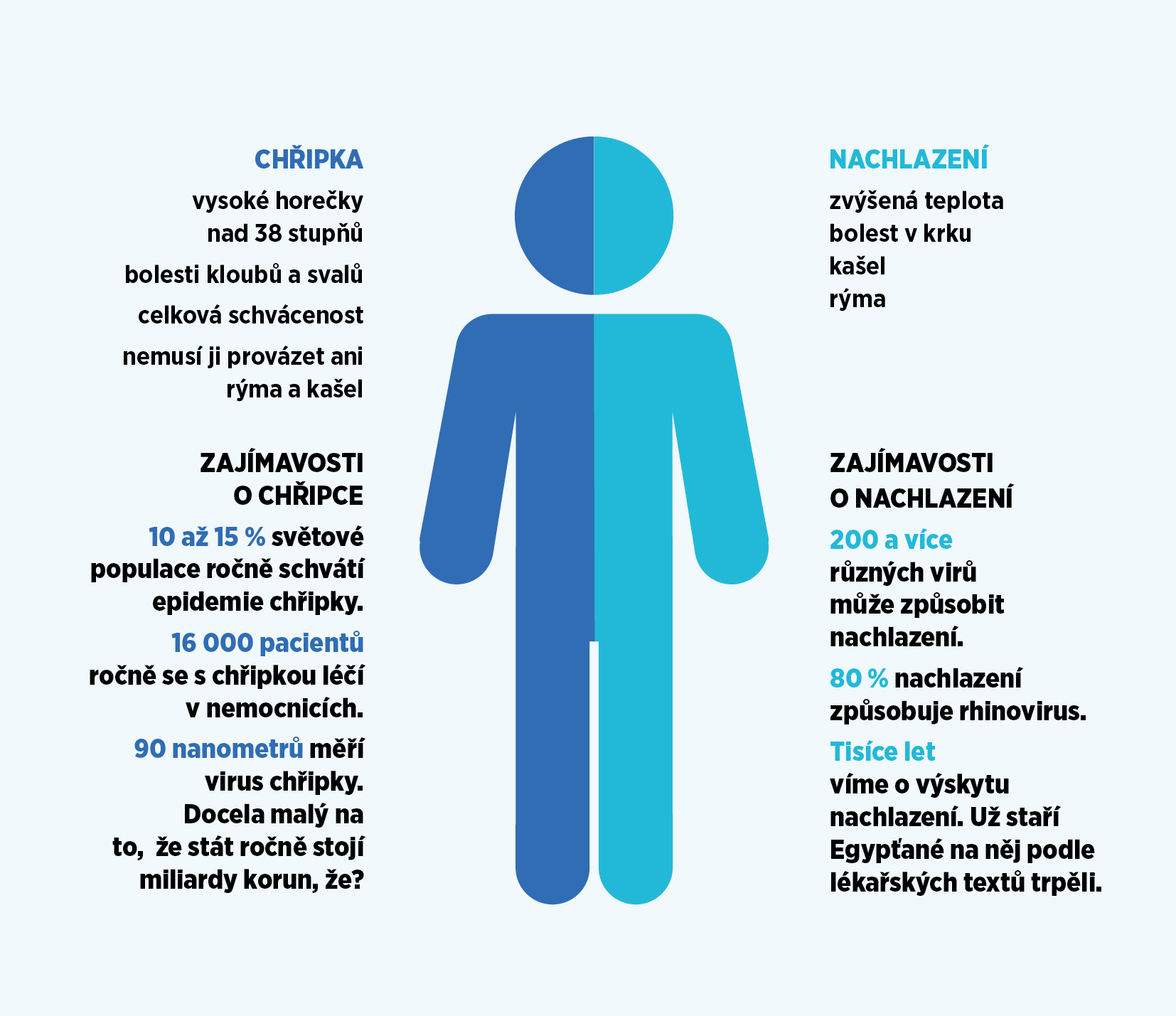
Both diseases are highly contagious, raging from autumn to spring, their incubation period is around two days and treatment takes about a week. But that's where their similarities end. Next time, try to get the diagnosis right from the symptom chart, but don't forget the covid. This is now very similar to the common cold and is dominated by respiratory symptoms - cough, runny nose, fever.
"The flu is more characterised by general symptoms such as fever, joint and muscle pain, marked fatigue. Coughing appears later. Although both of these illnesses usually last a week to ten days, fatigue may persist longer. Covida also increases during the cold months. Fortunately, however, its course is usually milder than we remember," says adult general practitioner Michaela Malack.
"The typical complication is pneumonia, which manifests itself in shortness of breath and a persistent cough."
When to sound the alarm?
Remember, the key time is a week. If cold problems persist for roughly that long or longer and rest, warmth, plenty of fluids, available cough medicines, throat lozenges and nasal sprays aren't working, you should think about a trip to the doctor's office. And if you are experiencing high fevers, shortness of breath, chest pain or coughing up blood, run now. These illnesses should not be underestimated.
Seven rules to protect yourself
How can we prevent getting infected? Any epidemiologist will tell you that the traditional saying "cleanliness is half the health" is true. "My favourite phrase from studies is that nothing in medicine is 100% valid. We certainly won't be able to prevent all disease, but we should definitely try," says Dr. Malack.
1. Hands, drapes, spacing (the 3R rule against droplet transmission)
2. Vaccinations (whether for flu, cowid, or pneumococcus)
3. Getting enough sleep
4. Regular exercise
5. A portion of fruit and vegetables with every meal
6. No smoking
7. Positive mind