The neurological outpatient clinic provides diagnosis and treatment of the entire spectrum of diseases of the nervous system, i.e. the brain, peripheral nerves and other structures. Thanks to close cooperation with Hospital Hořovice and specialized centres in higher type hospitals, full patient care is ensured.
- Vertebrogenic problems ranging from simple back pain to root syndromes in case of intervertebral disc prolapse
- muscle diseases - myopathies, myotonia, myositis
- neuromuscular transmission disorders - myasthenia, myasthenic sy
- peripheral nerve involvement - polyneuropathy, mononeuropathy, cranial neuropathy
- demyelinating diseases - multiple sclerosis
- extrapyramidal system disorders
- epilepsy and epileptic syndromes
- other seizure disorders - e.g. neuralgia n. V, IX, Meniere's disease, migrainous cephalea
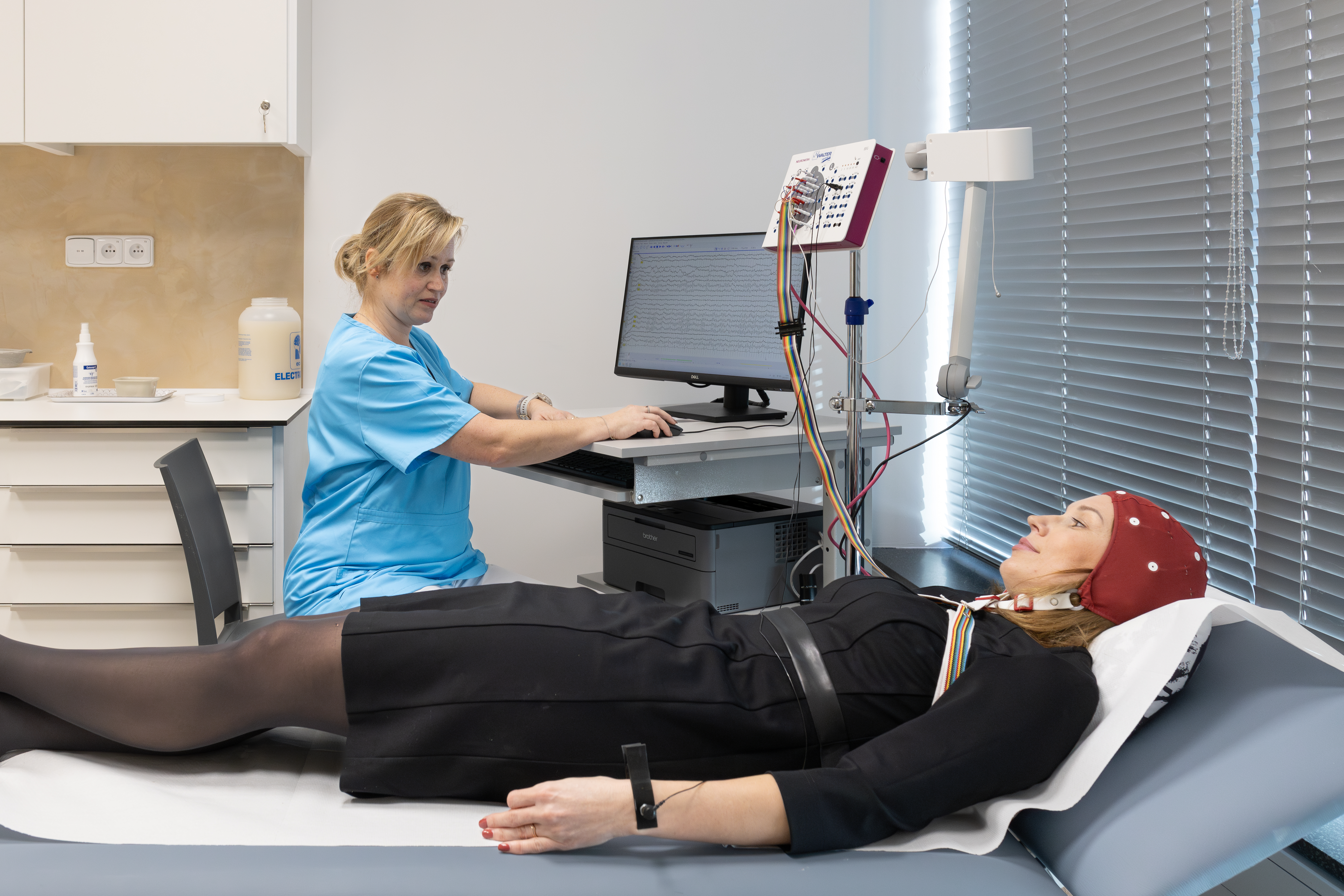
EMG (Electromyography)
An electrophysiological method used todetermine the functional status (diagnosis of impairment) of motor nerve cells in the spinal cord (e.g. ALS ), some nerve roots, peripheral nerves (often carpal tunnel syndrome or polyneuropathy of the lower limbs), neuromuscular transmission (especially dg. myasthenia gravis - MG), muscles (dg. myopathy) or demonstration of increased neuromuscular excitability (tetany).
It includes various methods of stimulation and registration of activity in the peripheral nervous system and muscle, such as neurography (examining the conduction velocity and some other parameters of peripheral nerve fibres with superficial skin electrodes), repetitive stimulation (in MG examinations, repeatedly 8-10 stimuli at a low frequency of 2-3 Hz) and needle EMG (an invasive technique using a thin needle electrode inserted through the skin into the muscle).
The examination, which is performed on the recommendation of a general physician, neurologist or other specialist (e.g. diabetologist, orthopaedic surgeon), is tolerated by the vast majority of patients without difficulty, but in some cases may be perceived as mildly uncomfortable.
There is no special preparation, the limbs should be clean, free of locally applied cosmetic or medical products and accessible. Cholinesterase inhibitors (drugs used in the treatment of MG) are not used 24 hours before the examination with repetitive stimulation.
Outpatient clinic of the Regional Spasticity Centre of Hospital Hořovice - AKESO POLICLINIC
Examination and treatment of patients with spasticity of the limbs ( e.g. after stroke, cerebral palsy, in patients with multiple sclerosis...) is carried out in cooperation with the Rehabilitation Hospital Beroun.
The quality of care is ensured by the cooperation of an erudite neurologist (botulinum toxin applicator with a ČNS certified neurosonology course, functional expertise for electromyography), rehabilitation physician, physiotherapist, speech therapist.
Injection of botulinum toxin into the affected muscles under USG ( ev. EMG) control is also carried out in focal dystonia (involuntary muscle spasms and contractions causing abnormal movements or positions of body parts) especially cervical ( cervical muscle involvement with twisting, bowing, head tremor), blepharospasm ( clenching of the eyelids), graphospasm ( spasm of the hand when writing), hemifacial spasm ( uncontrollable twitching of the muscles of one side of the face) or to the salivary glands to relieve the accumulation and leakage of saliva due to neurological disorders.
The effect of botulinum toxin therapy lasts 2 to 4 months, and injections are repeated after the effect has subsided.

 Česky
Česky